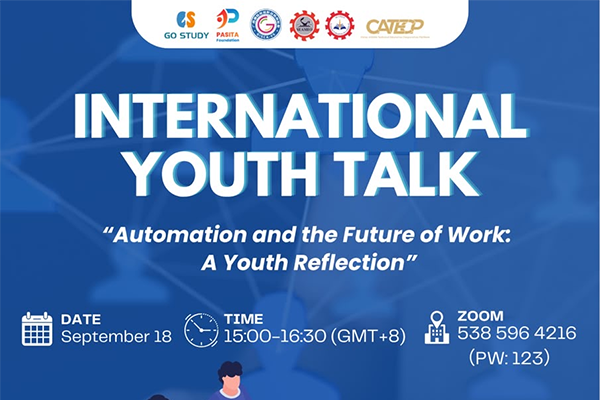

Automation and the Future of Work: A Youth Reflection
#ICT# #IOT#

18th Sep 2026

Clicks:
Academic Hours
1.50hours
Event Date
18 Sep 2026

Speaker

1. Constantinho A.S DA SILVAPoliteknik Siber Cerdika Internasional - Indonesia

2. Maria da CruzPoliteknik Siber Cerdika Internasional - Indonesia

3. Antonio SarmentoPoliteknik Siber Cerdika Internasional - Indonesia

4. Jaqulina AmaralPoliteknik Siber Cerdika Internasional - Indonesia

5. Silida SithanRoyal Universityof Phnom Penh - Cambodia

6. Ratana DaraRoyal Universityof Phnom Penh - Cambodia

7. Fathira Hanan ArtaryUniversitas Riau - Indonesia

8. Shinta SaputriUniversitas Riau - Indonesia

9. Akmal CaesarUniversitas Riau - Indonesia

10. Cecilia Putri HalimUniversitas Riau - Indonesia

General Introduction
This edition highlights “Automation and the Future of Work: A Youth Reflection.” As automation, artificial intelligence, and digital technologies continue to transform workplaces, young people are increasingly faced with changes in the way they learn, work, and build their careers. While automation can improve efficiency, create new opportunities, and support innovation, it may also change existing job roles and require workers to develop new skills. These changes highlight the importance of adaptability, digital literacy, critical thinking, and continuous learning among younger generations. In an era where technology is rapidly reshaping industries and professional environments, understanding the impact of automation on the future of work is becoming increasingly important. The topic encourages participants to reflect on how technological developments may influence their future careers, the skills they need to develop, and the ways young people can adapt to a changing labor market.
It also highlights the importance of balancing technological progress with human skills such as creativity, communication, collaboration, and problem-solving. Through presentations, case studies, and interactive discussions, this session invited participants to explore how automation may influence different sectors and the opportunities and challenges it may create for young workers. The session also emphasized the importance of lifelong learning, adaptability, and responsible use of technology in preparing for future workplaces. Participants were encouraged to reflect on their own career aspirations, identify skills they wish to strengthen, and consider how young people can contribute to shaping a future of work that is innovative, inclusive, and responsive to the needs of their communities and beyond. knowledge sharing can contribute to stronger and more inclusive ASEAN communities and beyond.

This Course is for
1. University students and young adults interested in technology, career development, and the future of work who wish to understand how automation and emerging technologies may shape employment opportunities, workplace practices, and the skills needed for their future careers.
2. Undergraduate students and early-career professionals seeking to explore the opportunities and challenges created by automation, including changing job roles, digital transformation, reskilling, adaptability, and the importance of human skills such as communication, creativity, and critical thinking.
3. Scholars, lecturers, researchers, and practitioners focusing on education, technology, workforce development, digital transformation, and youth development who aim to examine the impact of automation on employment, skills development, and workplace changes through real-world examples and case studies.
4. Young people and globally minded participants eager to gain perspectives on how automation is transforming different industries and communities, particularly across ASEAN, and to reflect on how youth can develop relevant skills, adapt to technological change, and contribute to a more inclusive and sustainable future of work.

Learning Materials

1. Lecture PPT

Supported by

Benefits of Learning

1. Gain insights into the impact of automation and emerging technologies on the future of work, exploring how technological developments are transforming industries, job roles, and career opportunities for young people.
2. Understand both the opportunities and challenges created by automation, including increased efficiency, new career pathways, changing job requirements, digital transformation, and the need for reskilling, adaptability, and lifelong learning.
3. Connect theory with real-world application by examining actual case studies of automation and technological change across different industries, exploring how organizations and workers are adapting to new workplace environments.
4. Develop awareness of the skills needed for the future of work through discussions among students, educators, researchers, and young professionals, with a focus on digital literacy, critical thinking, creativity, communication, collaboration, and other human-centered skills.
5. Encourage reflection and knowledge exchange among young people by discussing how youth can prepare for technological changes, adapt to evolving career opportunities, and contribute to a future of work that is innovative, inclusive, and sustainable, particularly across ASEAN.

Courses Videos

Documents
Please log in and download